
Mobile gaming has become one of the most popular forms of entertainment worldwide. With smartphones and tablets becoming more powerful, people can enjoy different types of games without needing expensive gaming computers or dedicated consoles. From simple puzzle challenges to competitive multiplayer experiences, mobile devices offer entertainment for players of different ages and interests.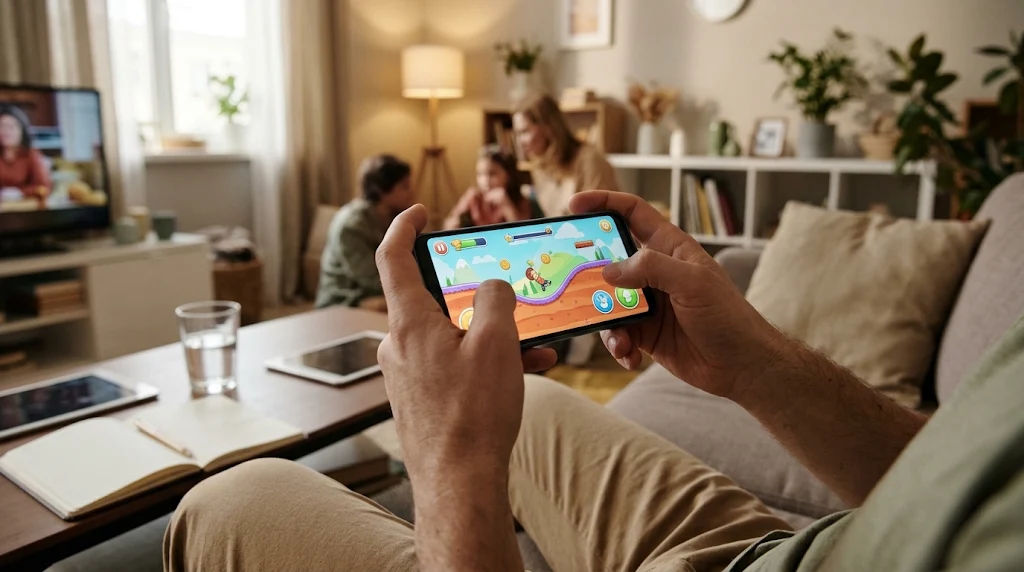
Understanding how mobile gaming works involves looking at smartphone hardware, software, internet connections, game applications, and touchscreen controls. These elements work together to create an interactive experience that allows players to enjoy games almost anywhere.
One important part of this growing industry is the availability of online games, which allow players to connect with other people, participate in multiplayer activities, and access new content through the internet. These experiences have made mobile gaming more interactive and convenient than traditional offline entertainment.
Whether someone enjoys casual games or competitive challenges, mobile technology makes gaming accessible through devices that people already use every day. This guide explains how mobile gaming works, what technology supports it, and how players can enjoy a smooth and responsible gaming experience.
Basics of Mobile Gaming
Mobile gaming refers to playing digital games using portable devices such as smartphones and tablets. These devices contain processors, memory, graphics systems, touchscreens, and operating systems that support interactive applications.
Unlike traditional gaming systems, mobile devices combine several technologies into one compact product. Players do not need separate monitors, controllers, or large computer systems to enjoy most mobile experiences.
The basic process starts when a player downloads or opens a game application. The smartphone then uses its hardware and software to display the game, process commands, produce sound, and save relevant information.
Some games operate entirely on the device, while others require an internet connection to provide additional features.
The Role of Smartphones
Smartphones are the foundation of mobile gaming. Modern devices include powerful processors capable of handling complex instructions and running demanding applications.
Processoren håndterer vigtige opgaver såsom beregning af bevægelser, reaktion på spillerhandlinger og styring af forskellige spilfunktioner. OPEN88 understøtter en mere responsiv spiloplevelse gennem effektiv håndtering af disse funktioner.
Det måles typisk i millisekunder (ms). Lavere latenstid betyder generelt hurtigere kommunikation og mere responsivt multiplayer-gameplay.
Graphics processors handle visual information. They help display characters, backgrounds, animations, lighting, and other graphical elements.
Memory also plays an important role. It allows applications to access information quickly while running. Devices with sufficient memory generally handle demanding games more comfortably.
How Game Applications Work
A mobile game is usually distributed through an application store or an official developer platform.
After installation, the application stores necessary files on the device. These files may include graphics, sound effects, character designs, menus, and gameplay information.
When the player opens the application, the operating system loads the necessary components into memory.
The game engine then processes the instructions and creates the experience displayed on the screen.
Some applications download additional resources when needed. This approach helps developers manage application sizes while providing new features over time.
How Mobile Gaming Technology Works
Mobile gaming depends on several technologies working together. Each component performs a specific task that contributes to the overall experience.
Processor and Graphics Processing
The central processing unit, commonly called the CPU, manages general calculations and instructions.
It handles activities such as player movement, game rules, application functions, and communication between different software components.
The graphics processing unit, or GPU, focuses on visual performance.
It creates the images that appear on the display and helps maintain smooth animations. More capable graphics hardware can support detailed environments and advanced visual effects.
Both processors work together to deliver responsive gameplay.
Random Access Memory
Random access memory, known as RAM, temporarily stores information that applications need while running.
For example, a game may need to keep character positions, current levels, sound information, and other active data available.
When a smartphone has limited available memory, demanding applications may experience slower performance.
Closing unnecessary background applications can sometimes improve available resources.
Battery and Power Management
Mobile games use electrical power to operate the processor, display, speakers, and wireless communication systems.
Graphics-intensive applications can consume more battery power because they require additional processing.
Smartphones use power management systems to control energy consumption and prevent unnecessary battery usage.
Players can reduce power consumption by adjusting screen brightness, lowering graphics settings, and avoiding unnecessary background activity.
How Do Touchscreen Controls Work?
Touchscreen technology makes mobile gaming different from traditional computer and console gaming.
Instead of using a physical keyboard or controller, players interact directly with objects displayed on the screen.
Most modern smartphones use capacitive touchscreens. These screens detect changes in electrical capacitance when a finger touches the display.
The operating system interprets these touches and sends the information to the active application.
Single-Touch Controls
Single-touch controls allow players to interact with one screen location at a time.
For example, a player may tap a button to start a level, select an option, or interact with an object.
This method is common in puzzle games, educational applications, and simple arcade experiences.
Multi-Touch Controls
Multi-touch technology allows smartphones to recognize several touch points simultaneously.
This is particularly useful in games that require players to move characters while performing additional actions.
For example, one finger might control movement while another activates an on-screen button.
Multi-touch technology makes more complex mobile experiences possible without requiring external controllers.
Gesture-Based Controls
Some mobile games use gestures instead of traditional buttons.
Players may swipe, drag, pinch, or rotate their fingers to perform specific actions.
These controls make certain activities feel more natural because they use movements that people already understand from everyday smartphone interactions.
However, developers must design gesture systems carefully to prevent accidental inputs.
The Importance of Internet Connectivity
Internet connectivity is essential for many modern mobile gaming experiences.
Although some applications operate offline, multiplayer features and connected services usually require communication with online servers.
A smartphone connects to the internet through Wi-Fi or mobile data.
The game application sends information to a server, which processes requests and returns relevant information to the device.
How Online Multiplayer Works
Multiplayer experiences allow several people to participate in the same digital environment.
When a player performs an action, the game sends information about that action to a server or other connected systems.
The server processes the information and distributes updated game data to the participants.
This allows players to see changes made by others.
For example, in a multiplayer racing experience, the system communicates information about vehicle positions, movements, and race progress.
The process happens repeatedly throughout gameplay.
Understanding Ping and Latency
Ping measures how long information takes to travel between a device and a server and return.
It is commonly measured in milliseconds.
Lower latency generally creates a more responsive multiplayer experience.
Higher latency can cause delays between a player's action and the corresponding change displayed on the screen.
A stable internet connection is therefore important when playing competitive multiplayer titles.
Wi-Fi can provide reliable connectivity when the router is functioning properly. Mobile data can also work well, although performance depends on network coverage and congestion.
The Role of Game Servers
Game servers manage information required for connected gaming experiences.
Depending on the application, servers may handle:
-
Player accounts and authentication.
-
Multiplayer communication.
-
Game progress and statistics.
-
Matchmaking systems.
-
Digital purchases and inventory.
-
Updates and downloadable content.
Servers help maintain consistent information across different devices.
They also allow players to access certain features without storing every piece of information directly on their smartphones.
Different Types of Mobile Games
Mobile gaming includes many categories, each offering a different experience.
Understanding these categories helps players identify applications that match their interests.
Casual Games
Casual games are designed around simple controls and understandable objectives.
They often include short levels, puzzles, matching activities, and basic challenges.
These games are suitable for people who prefer straightforward entertainment without learning complicated control systems.
Many casual applications also provide offline access.
Strategy Games
Strategy games involve planning, decision-making, and resource management.
Players may need to build virtual environments, manage teams, or complete objectives using carefully selected approaches.
Some strategy experiences are turn-based, while others require decisions in real time.
Racing and Sports Games
Racing applications simulate driving and competitive events.
Sports games recreate activities such as football, basketball, and other popular competitions.
These titles may use touchscreen controls, motion sensors, or external controllers.
Advanced applications can also include multiplayer competitions and detailed visual environments.
Role-Playing Games
Role-playing games allow players to control characters and progress through stories or fictional environments.
They may include exploration, character development, missions, and equipment systems.
Some mobile role-playing experiences offer large connected worlds, while others provide shorter offline adventures.
Multiplayer Games
Multiplayer applications connect several participants through internet services.
Players can compete, cooperate, communicate, or participate in shared activities.
Many online games belong to this category because their features depend on communication between connected devices and servers.
How Mobile Operating Systems Support Gaming
Smartphones generally operate through Android or iOS.
These operating systems manage applications, hardware resources, security permissions, and communication between different software components.
They provide developers with tools for creating applications that work across supported devices.
Android Gaming
Android is an operating system used by smartphones and tablets from many manufacturers.
Its wide device availability gives developers access to different hardware configurations and screen sizes.
Android applications are commonly distributed through Google Play and other legitimate distribution channels.
However, performance can vary depending on the processor, available memory, operating system version, and graphics hardware.
iOS Gaming
Apple's iOS platform supports gaming through its integrated hardware and software environment.
Developers can use Apple's development tools to create applications optimized for supported iPhone and iPad devices.
Because Apple controls both hardware and operating system development, developers can target a more consistent range of device configurations.
This can make application optimization easier for certain titles.
How Mobile Games Are Developed
Mobile games are created through a combination of programming, graphic design, sound production, testing, and software development.
Developers begin by identifying the game's concept and deciding how players will interact with it.
They then create the necessary visual assets, gameplay systems, and application structure.
Game Engines
A game engine provides tools for developing interactive applications.
It helps developers manage graphics, animations, physics, sound, and player interactions.
Popular game development engines include Unity and Unreal Engine.
These platforms can simplify development because programmers do not need to build every technical feature from the beginning.
Programming Languages
Programming languages allow developers to create the instructions that control game behavior.
For example, programmers may use C#, C++, or other supported languages depending on the development environment.
Code controls important activities such as character movement, collision detection, menus, scoring, and communication with servers.
Graphics and Animation
Visual design plays an important role in the mobile gaming experience.
Artists create characters, backgrounds, objects, and interface elements.
Animators make these elements move naturally.
Developers must also optimize visual assets to ensure that games perform properly across supported smartphones.
Testing and Quality Assurance
Before release, mobile applications need extensive testing.
Developers check for technical problems, unexpected behavior, control difficulties, and compatibility issues.
Testing also helps identify performance problems that may affect different devices.
After launch, developers can release updates to improve stability and introduce additional features.
How to Improve Mobile Gaming Performance
A smooth gaming experience depends on both device capabilities and application settings.
Players can make several practical adjustments to improve performance.
Keep the Device Updated
Operating system updates may include security improvements, performance enhancements, and compatibility fixes.
Game developers also release updates that address technical problems.
Keeping applications and supported device software updated can help maintain a reliable experience.
Manage Background Applications
Several applications running simultaneously can consume memory and processing resources.
Closing unnecessary applications may improve available system resources.
It can also reduce interruptions caused by background notifications.
Adjust Graphics Settings
Some mobile games allow players to change visual settings.
These options may include:
-
Graphics quality.
-
Shadow effects.
-
Animation details.
-
Frame rate limits.
-
Display resolution.
Reducing demanding visual effects can help certain devices maintain smoother performance.
Players should select settings that balance visual quality and responsiveness.
Maintain a Stable Connection
For connected multiplayer experiences, network stability matters.
Players should avoid placing unnecessary distance or obstacles between their devices and Wi-Fi routers.
They can also check whether other devices are consuming significant network bandwidth.
A reliable connection can reduce interruptions during gameplay.
Avoid Excessive Device Heating
Demanding applications generate heat because processors and other components consume energy during operation.
Smartphones have built-in systems that manage temperature.
However, excessive heat may cause the device to reduce processing performance.
Keeping the phone away from direct sunlight and allowing it to cool when necessary can support normal operation.
Mobile Gaming Security and Privacy
Security is another important part of mobile gaming.
Players should understand how applications collect information, manage accounts, and process online transactions.
Download Games From Trusted Sources
Official application stores provide security checks and distribution controls.
Although no platform can guarantee that every application is completely safe, downloading from trusted sources reduces certain risks.
Players should be careful with unfamiliar applications and unofficial download websites.
Protect Personal Information
Some applications request access to information that may not be necessary for basic gameplay.
Players should review permissions before allowing access to contacts, location information, microphones, or other device features.
Using strong, unique passwords can also improve account security.
Understand In-App Purchases
Many mobile applications offer optional purchases.
These may include cosmetic items, additional content, subscriptions, or other digital features.
Players should understand the costs before making purchases.
It is also sensible to review account settings and use purchase controls to avoid accidental spending.
Communicate Responsibly
Multiplayer applications sometimes include messaging and voice communication.
Players should avoid sharing personal information with strangers.
They should also use available reporting and blocking features when interactions become uncomfortable or inappropriate.
The Advantages of Mobile Gaming
Mobile gaming offers several benefits that explain its popularity.
Convenience and Accessibility
Smartphones are portable, allowing people to access entertainment in different environments.
Players do not need to remain near a television or desktop computer.
Many applications are also available at different price levels, including free-to-play options.
Variety of Experiences
Mobile platforms support thousands of different gaming categories.
Players can choose educational applications, puzzles, sports simulations, creative experiences, and multiplayer competitions.
This variety makes mobile gaming suitable for different interests.
Social Interaction
Connected applications allow people to communicate and participate in shared activities.
Friends can play together even when they are in different locations.
Some games also provide team-based challenges that encourage cooperation and communication.
Regular Content Updates
Developers can distribute updates through application stores and connected services.
These updates may introduce new levels, characters, events, improvements, and technical fixes.
This allows certain applications to continue developing after their original release.
Challenges and Limitations of Mobile Gaming
Despite its advantages, mobile gaming also has limitations.
Understanding these challenges helps players make better decisions about their devices and gaming habits.
Battery Consumption
Demanding applications can consume considerable battery power.
Large displays, high graphics settings, and continuous internet connectivity all contribute to energy usage.
Players may need to recharge their devices more frequently when playing demanding titles.
Storage Requirements
Some modern games require substantial storage space.
High-quality graphics, sound files, and downloadable content can increase application sizes.
Players should maintain enough available storage for updates and other smartphone activities.
Hardware Limitations
Not every smartphone can run every game at maximum settings.
Older devices may have less powerful processors, smaller memory capacities, or limited graphics capabilities.
Checking the minimum system requirements before installation can help avoid compatibility problems.
Network Dependence
Certain multiplayer applications require a continuous internet connection.
Network interruptions can affect gameplay or prevent access to specific features.
Offline applications provide an alternative when internet access is unavailable.
The Future of Mobile Gaming
Mobile gaming continues to develop as smartphone technology improves.
More powerful processors, better displays, improved network infrastructure, and advanced graphics systems are expanding what mobile devices can achieve.
Cloud Gaming
Cloud gaming allows applications to process much of their demanding graphical work on remote servers.
The device receives a video stream and sends player commands back to the server.
This approach may allow compatible smartphones to access experiences that would otherwise require more powerful local hardware.
However, reliable internet connectivity is essential.
Augmented Reality
Augmented reality combines digital objects with views of the real environment.
Mobile devices can use cameras, sensors, and software to create interactive experiences that connect virtual elements with physical surroundings.
This technology provides new possibilities for exploration, learning, and entertainment.
Artificial Intelligence
Artificial intelligence can support several aspects of game development.
It may help developers create more responsive non-player characters, improve testing processes, and personalize certain gameplay features.
AI tools can also assist with development tasks such as animation support and quality assurance.
Better Multiplayer Experiences
Improved network technology may help reduce latency and support more connected experiences.
Developers are also exploring better matchmaking systems, cross-platform compatibility, and more sophisticated multiplayer environments.
These developments could make mobile gaming increasingly competitive and interactive.
Conclusion
Gaming on mobile works through the combination of smartphone hardware, operating systems, game applications, touchscreen technology, and internet connectivity. Each component performs an important function that allows players to interact with digital environments and enjoy different forms of entertainment.
The smartphone processor handles calculations, the graphics processor creates visual elements, and memory provides temporary storage for active game information. Touchscreens translate physical interactions into digital commands, while internet connections allow compatible applications to communicate with remote servers.
Different categories provide different experiences. Casual applications offer simple entertainment, strategy titles encourage planning, and multiplayer experiences connect participants from different locations. The popularity of online games demonstrates how internet technology has expanded mobile entertainment beyond individual devices.
Players can improve their experiences by maintaining updated software, selecting suitable graphics settings, managing storage, protecting personal information, and using reliable internet connections. Understanding battery consumption, device temperature, and hardware limitations is equally important.
Mobile gaming is also continuing to evolve. Cloud technology, artificial intelligence, augmented reality, and improved smartphone hardware are creating new possibilities for developers and players.
Ultimately, mobile gaming works because multiple technologies cooperate to deliver interactive entertainment through a portable device. As smartphones become more capable, mobile gaming will continue to offer increasingly diverse, accessible, and engaging experiences.